Corn is our Relative
Corn is our Relative
Our ways of knowing and being live in the seeds our ancestors carried.
Sky Woman
Skywoman fell from the Skyworld carrying seeds of life. She landed on the back of a sea turtle, where the earth began to grow. In time, Skywoman and her two grandchildren bury their daughter/mother and from her body come our first foods and medicines—among them tobacco strawberries, squash, beans, and corn.


Tuscarora White Corn
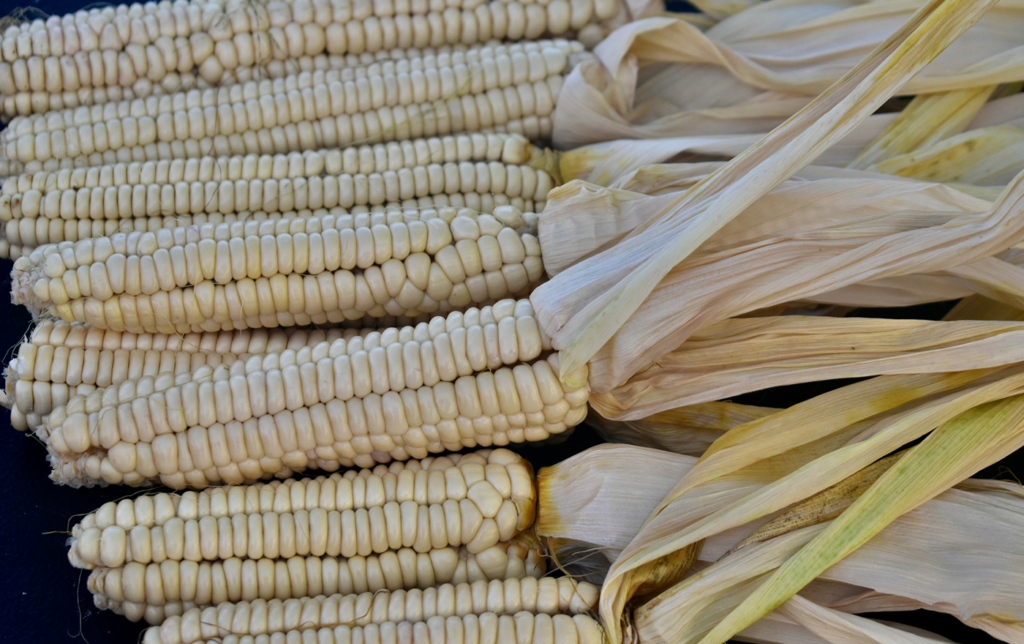
Oneida people brought corn seeds with them, including Tuscarora White Corn when they relocated from our homelands. Across Native communities this open-pollinated flint corn has become a well-known traditional corn variety that allows us to continue ancestral diets and foodways. It was the first corn variety that Ohe·láku planted with seed donated by Oneida Nation Chairman Tehassi Hill. The Tuscarora White Corn cobs grow over 12-18 inches long and have eight straight rows of white kernels that take 110 days to reach maturity. We continue to plant it across generations.
Corn Travels
The Tuscarora White Corn and Seed we grow travels on four paths.

Ohe·láku Member Families
Shared directly with member families to nourish households and community connections.
Seed for Food Security
Preserved to strengthen food security and provided during times of need.
Ceremonial Use
Reserved for Longhouse and family cultural use: end of life, rites of passage, wedding.
Native Food Economies
Contributed to support Native food economies, community gatherings, and cultural programs.
48.25 Acres
Acres of Corn Planted Since 2015
“This seed cob has the kernels that will bring forth the next generations of our corn.”
—Rebecca Webster